The Namesake
The town was named for George Jenkins, a Director for the Consolidation Coal Company.
The Mines
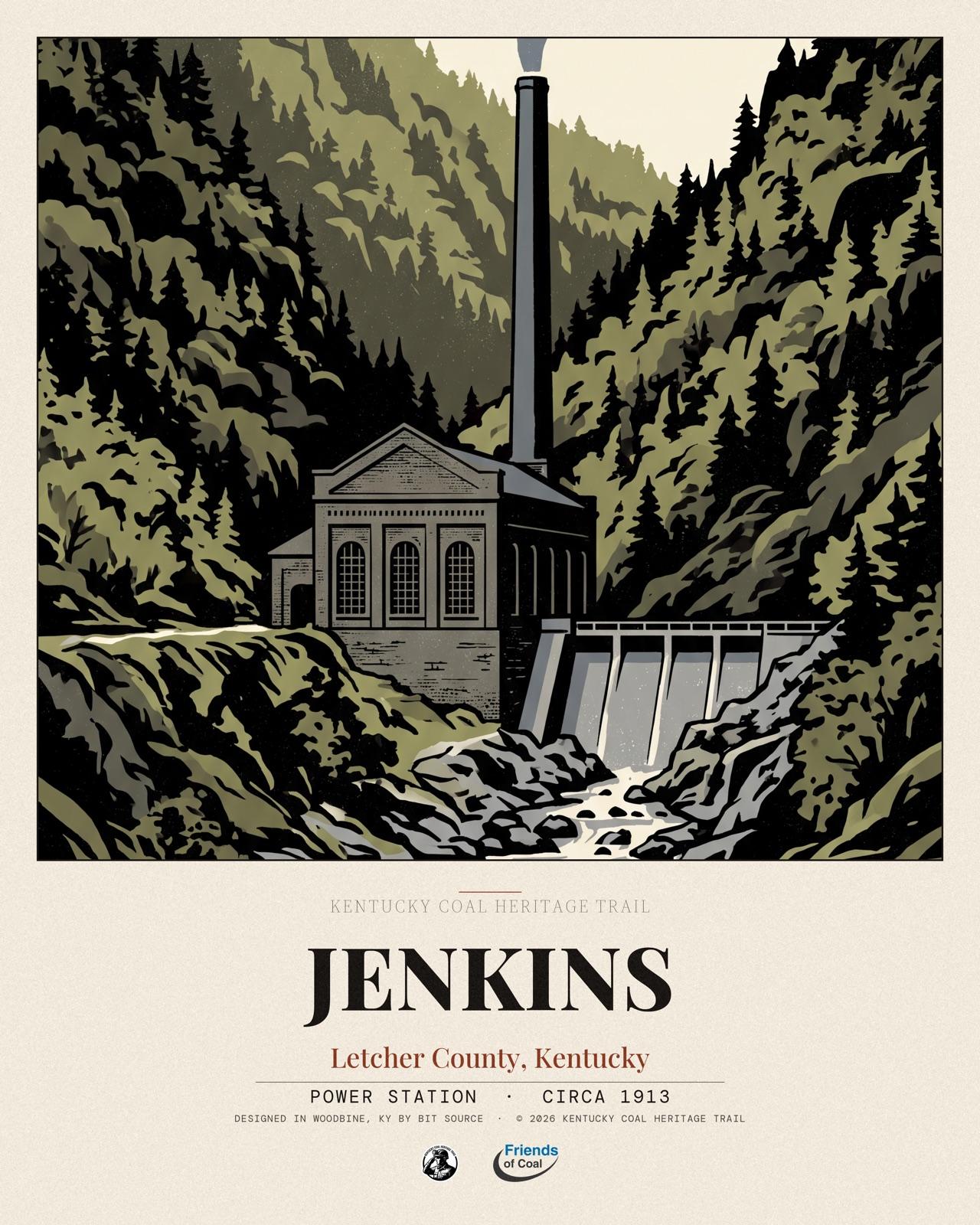
A central coal tipple was located at Dunham to process all of the coal from Consol's mines in the area and load it onto trains, although there were smaller tipples in the auxiliary coal towns. A central power plant was built at Jenkins to provide electricity for all of these coal towns and mines. Consol built a large lake at Jenkins to provide water to its towns as well as the steam turbines in the central power plant. The people in Burdine, Jenkins, and Dunham worked in Mines No. 201 through 208. On the other side of the mountain in McRoberts, Consol employees mined coal in Mines No. 209-215. Consol called their Letcher County properties the Elkhorn Division. In 1956, Consolidation Coal Company solid its properties around Jenkins to Bethlehem Steel, who operated them as the Beth-Elkhorn Coal Corporation until the 1980s.
Important Places
The David A. Zegeer Coal-Railroad Museum is in a historic railroad depot in Jenkins. The museum contains many coal mining tools and other coal town relics such as helmets and scrip tokens. The museum also contains photographs and news articles from throughout Jenkins’ history.
Notable People
David A. Zegeer dedicated his career to protecting the health and safety of miners as a corporate mining executive, as head of the U.S. Mine Safety and Health Administration (MSHA), and as a community leader. His tenure at MSHA coincided with a period of remarkable progress in U.S. mining safety. In three of his years as Assistant Secretary of Labor under President Reagan, mining fatalities in the coal industry and in the metal and non-metal mining industries decreased to historic lows. Zeeger began his mining career with Consolidation Coal Company in Jenkins in 1946, and the David A. Zegeer Coal-Railroad Museum remains in Jenkins today as a testament to his legacy.
Darwin K. Kyle was an army veteran, born in Jenkins, who served in World War II and the Korean War. Kyle earned both a Silver and Bronze Star for his heroic actions in France and Germany during WWII, and was presented with a Medal of Honor for his valor in the Korean War.
Francis Gary Powers was a pilot who served in the United States Air Force and the CIA. Powers is best known for his involvement in the 1960 U-2 incident, when he was shot down while flying a secret CIA spying mission over the Soviet Union. He survived this incident and was a Soviet prisoner for nearly two years.
Gary Ronnie Stewart was a musician and songwriter born in Jenkins and known for his distinctive vibrato voice and his outlaw country sound influenced by southern rock. At the height of his popularity in the mid-1970s, Time magazine described him as the "king of honkytonk.
Kenneth Clayton Baker was a bluegrass fiddle player born in Burdine, an unincorporated community near Jenkins. Baker is best known for his 25-year tenure with Bill Monroe and his group The Blue Grass Boys
Audio transcript
THE TOWN OF: Jenkins, Letcher County, Kentucky Welcome to Jenkins The town of Jenkins was established in 1911 by the Consolidation Coal Company (often nicknamed Consol) and incorporated in 1912. In 1940, Jenkins and the coal camp towns of Dunham and Burdine, located along a 6 mile stretch along the Elkhorn Creek valley, all merged into the single town of Jenkins. The Namesake The town was named for George Jenkins, a Director for the Consolidation Coal Company. The Mines A central coal tipple was located at Dunham to process all of the coal from Consol's mines in the area and load it onto trains, although there were smaller tipples in the auxiliary coal towns. A central power plant was built at Jenkins to provide electricity for all of these coal towns and mines. Consol built a large lake at Jenkins to provide water to its towns as well as the steam turbines in the central power plant. The people in Burdine, Jenkins, and Dunham worked in Mines No. 201 through 208. On the other side of the mountain in McRoberts, Consol employees mined coal in Mines No. 209-215. Consol called their Letcher County properties the Elkhorn Division. In 1956, Consolidation Coal Company solid its properties around Jenkins to Bethlehem Steel, who operated them as the Beth-Elkhorn Coal Corporation until the 1980s. Important Places The David A. Zegeer Coal-Railroad Museum is in a historic railroad depot in Jenkins. The museum contains many coal mining tools and other coal town relics such as helmets and scrip tokens. The museum also contains photographs and news articles from throughout Jenkins’ history. Notable People David A. Zegeer dedicated his career to protecting the health and safety of miners as a corporate mining executive, as head of the U.S. Mine Safety and Health Administration (MSHA), and as a community leader. His tenure at MSHA coincided with a period of remarkable progress in U.S. mining safety. In three of his years as Assistant Secretary of Labor under President Reagan, mining fatalities in the coal industry and in the metal and non-metal mining industries decreased to historic lows.Zeeger began his mining career with Consolidation Coal Company in Jenkins in 1946, and the David A. Zegeer Coal-Railroad Museum remains in Jenkins today as a testament to his legacy. Darwin K. Kyle was an army veteran, born in Jenkins, who served in World War II and the Korean War. Kyle earned both a Silver and Bronze Star for his heroic actions in France and Germany during WWII, and was presented with a Medal of Honor for his valor in the Korean War. Francis Gary Powers was a pilot who served in the United States Air Force and the CIA. Powers is best known for his involvement in the 1960 U-2 incident, when he was shot down while flying a secret CIA spying mission over the Soviet Union. He survived this incident and was a Soviet prisoner for nearly two years. Gary Ronnie Stewart was a musician and songwriter born in Jenkins and known for his distinctive vibrato voice and his outlaw country sound influenced by southern rock. At the height of his popularity in the mid-1970s, Time magazine described him as the "king of honkytonk. Kenneth Clayton Baker was a bluegrass fiddle player born in Burdine, an unincorporated community near Jenkins. Baker is best known for his 25-year tenure with Bill Monroe and his group The Blue Grass Boys